Our sense of sight is the greatest witness to the memories we accumulate over the years, the smiles on our loved ones' faces, and the unique beauties of the world. However, as time progresses, the cellular aging and natural physiological changes occurring in our bodies are also reflected in this perfect window of our eyes. Known commonly as a "curtain falling over the eye," Age-Related Cataracts are the most common cause of preventable blindness and vision loss worldwide. Today, with advanced medical technology, it is a condition that can be treated in minutes with extremely satisfying results.
As Ophthalmology Specialist Ayşe Öner and her visionary clinical team with superior surgical experience, we combine the latest technologies in cataract surgery with Turkey’s unwavering reliability in health tourism and VIP service quality. We offer our international patients applying from different geographies not only the opportunity to transition from a misty world to clarity but also a comfortable, completely stress-free, and first-class medical travel experience. While we eliminate the blurriness in your eyes with advanced microsurgical techniques, we host you with Turkey’s unique hospitality.
What is Age-Related Cataract (Senile Cataract)?
The human eye functions similarly to a perfect camera. Right behind the iris (the colored part of our eye), there is an entirely transparent, flexible, and crystalline "natural intraocular lens" that refracts incoming light rays and focuses them onto the retina (the visual center). In youth, this lens is as clear as glass and possesses tremendous flexibility, allowing us to focus instantly at all distances, near and far.
Age-related cataract (Senile Cataract) occurs as a result of the slowing of this natural lens's cellular metabolism over the years, changes in its water content, and, most importantly, the clumping of its protein structure due to degradation (denaturation). The lens gradually loses its perfect transparency and begins to become dull, yellowish, or brownish.
You can compare this condition to looking outside through a fogged, dirty, or frosted glass. When the intraocular lens becomes opaque, incoming light cannot fall clearly onto the retina; instead, the light is scattered or blocked within the eye. Consequently, the quality of the image signals sent to the brain deteriorates, leading to a gradual and irreversible decline in visual acuity.
What are the Subtypes of Age-Related Cataract?
Depending on which part of the lens becomes opaque, age-related cataracts are divided into three main clinical groups:
- Nuclear Cataract (Starting in the Center): The most common type of age-related cataract. It begins with hardening, densification, and yellowing/browning at the very center (nucleus) of the lens. Initially, while the patient's distance vision deteriorates, they may notice they can temporarily read up close without glasses due to the increased refractive power of the lens (medically referred to as "Second Sight"). However, as the disease progresses, both distance and near vision become completely blurred.
- Cortical Cataract (Starting at the Edges): Characterized by white, wedge-shaped, or spoke-like opacities extending from the outer edges of the lens toward the center. Patients experience severe glare, especially as light hits and scatters across these wedge-shaped opacities.
- Posterior Subcapsular Cataract: A small but critical opacity forming at the very back of the lens, just in front of the capsule. It progresses much faster than other types. it makes reading difficult and significantly reduces vision in bright light or sunny weather.
What are the Risk Factors?
While the greatest factor is the "aging" process, certain genetic and environmental factors can trigger the early onset of cataracts and increase the rate of progression:
- Advanced Age: The most fundamental and inevitable factor. Most individuals over the age of 60 show clinically detectable early-stage cataract findings.
- Sunlight (UV) Rays: Exposure to intense ultraviolet (UV) rays over many years without protective sunglasses accelerates protein breakdown (oxidative stress) in the lens.
- Systemic Diseases: Especially diabetes (sugar disease) is the major metabolic factor that causes cataracts to develop much earlier (sometimes in the 40s) and more aggressively compared to the normal population.
- Habits and Nutrition: Intense smoking, excessive alcohol consumption, and a diet poor in antioxidants trigger cellular aging in the eye.
- Cortisone Use: Long-term use of systemic steroid (cortisone) medications for other diseases is a strong trigger for the formation of posterior subcapsular cataracts.
What are the Symptoms of Age-Related Cataract?
Cataract formation is an extremely insidious and slowly progressing process that does not cause pain, redness, or burning. Patients usually notice their vision gradually fading over the years. The most common complaints include:
- Decrease in visual clarity; perceiving objects as if in a foggy, smoky, or misty environment.
- Increased sensitivity to light; especially the blinding glare of oncoming headlights while driving at night and the formation of halos (rings) around lights.
- Loss of color vibrancy; a feeling of seeing the world through a yellowish, faded, or brown filter (difficulty distinguishing blue and purple tones).
- The need for frequent changes in eyeglass prescriptions, though even new glasses fail to provide sufficient clarity.
- The need for much stronger lighting than before for reading, sewing, or tasks requiring fine detail.
- Complaints of double or shadowed vision in advanced stages.
Diagnosis and Biometry Process with High Technology
The diagnosis of cataract is precisely made through a detailed and completely painless eye examination performed by Specialist Dr. Ayşe Öner. Our examination process includes these high-tech steps:
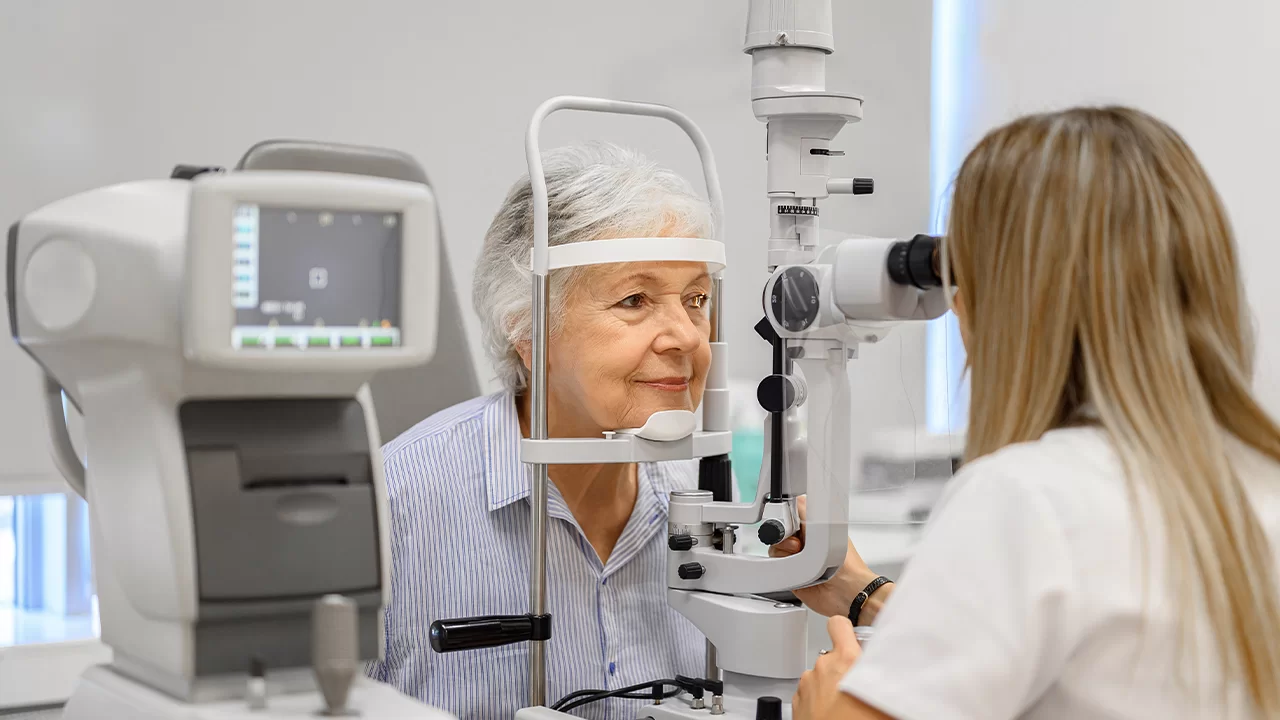
- Biomicroscopic Examination: The pupil is dilated with special drops, and the degree of opacity, hardness, and type of cataract are analyzed in detail using advanced microscopes called "slit lamps."
- Fundus (Retina) Examination: The eye is examined for other visual obstacles that might be hidden behind the cataract, such as macular degeneration, glaucoma, or diabetic retinopathy.
- Optical Biometry Measurement: This is the most important step determining surgical success. After the cataractous lens is removed, the refractive power (number) of the artificial lens to be implanted is calculated without error using laser-based optical biometry devices that create a millimeter-accurate map of the eye.
The Definitive Treatment Solution: PHACO (Phacoemulsification) Surgery
It is definitely not possible to treat age-related cataracts with medication, drops, eye exercises, or special nutrition programs. The only and definitive solution is to surgically remove the opaque lens that has lost its function and replace it with a clear artificial lens.
PHACO Surgery, applied at world standards in our clinic, is the gold standard in this field:
- Painless and Needle-Free Anesthesia: During the procedure, the eye is numbed only with special anesthetic drops. No needles, general anesthesia, or hospitalization are required.
- Micro-Incision: A very small (approximately 2.0 - 2.2 mm) sutureless tunnel is opened in the cornea (the transparent layer of the eye) without a scalpel.
- Cleaning with Sound Waves: A special ultrasonic device (Phaco probe) is inserted through this tiny incision. It emits ultrasonic sound waves to break the hardened and opaque cataractous lens into small pieces, which are simultaneously aspirated (vacuumed) out.
- Premium Lens Implantation: A specially foldable "Artificial Intraocular Lens" (IOL), which is 100% compatible with the body (acrylic structure) and will remain in the eye for life, is placed inside the transparent capsule that has been completely cleaned. The lens unfolds itself inside the eye and fits perfectly into its slot.
- Fast Recovery: The procedure is usually completed in a very short time, about 10-15 minutes. Since no stitches are used, the wound site closes on its own. The patient is discharged the same day. Visual clarity increases rapidly after a few days of using special drops.
Turkey and Specialist Dr. Ayşe Öner Privilege in Health Tourism
The microsurgical experience of the surgeon, the sterility of the operating room, and the quality of the artificial lens implanted absolutely determine the patient's visual comfort for the rest of their life. For our international patients who are given appointments months later due to bureaucratic hurdles in their own countries, our clinic offers "Accessible Excellence":
- Zero Waiting, Immediate Premium Surgery: Your high-tech optical biometry measurements are taken the day you step into Turkey. Your surgery is planned as soon as possible with world-class, FDA and CE-approved premium lenses.
- High Surgical Safety and Experience: Thanks to Dr. Ayşe Öner's vast surgical experience of tens of thousands of cases, even the riskiest cases—very advanced age, extremely hardened cataracts, or non-dilating pupils—are successfully operated on with minimum ultrasonic energy and without damaging the cornea.
- Flawless VIP Logistics and Healing Vacation: Because the recovery process after cataract surgery is very fast, this medical trip turns into an enjoyable vacation. VIP airport greetings, accommodation in prestigious luxury hotels, and all transfer processes are perfectly managed by our health tourism department.
- Native Language Guidance and Sustainable Follow-up: Every detail, from which lens (monofocal, smart, etc.) will be implanted to the drops you will use post-surgery, is conveyed to you by professional assistants in your native language. Your adaptation process after returning to your country is monitored continuously through our online tele-medicine network.
You are not condemned to watch the world through misty windows. To rediscover the vibrancy of colors and the clarity of life under expert hands with the miracle of advanced technology, contact our clinic equipped with Turkey's VIP health tourism privileges immediately. Let’s lift the curtain from your eyes and open the door to brighter days together.
Frequently asked questions
In the past, when older sutured surgical methods were used, such a necessity existed; however, today this is a completely false belief. In the advanced "Phacoemulsification (PHACO)" method applied in our clinic, sound waves are used. The harder the cataract becomes, the more difficult it is to break apart, requiring more energy to be delivered to the ocular tissues. On the contrary, the safest and fastest-recovering method is to have surgery the moment your cataract begins to affect your quality of vision (such as glare during night driving or fading of colors).
Cataract surgery is an extremely comfortable procedure that does not require general anesthesia or needle-based numbing around the eye. Your eye is completely desensitized with just a few anesthetic drops. You will be awake during the procedure, but you will definitely not feel any pain or stinging. Under the expert hands of Dr. Ayşe Öner, your surgery is completed without sutures in just 10-15 minutes, and you can stand up immediately.
There is no need for an inpatient hospital stay for this operation. As part of our "VIP Cataract Package," detailed ocular measurements (Biometry) are performed on the day you reach our clinic to determine the most suitable lens for you. Your procedure is performed either the same day or the following morning in our JCI-accredited operating rooms. Following your first check-up one day after surgery, you can safely board your flight or continue your holiday in Turkey while using your infection-preventing drops.