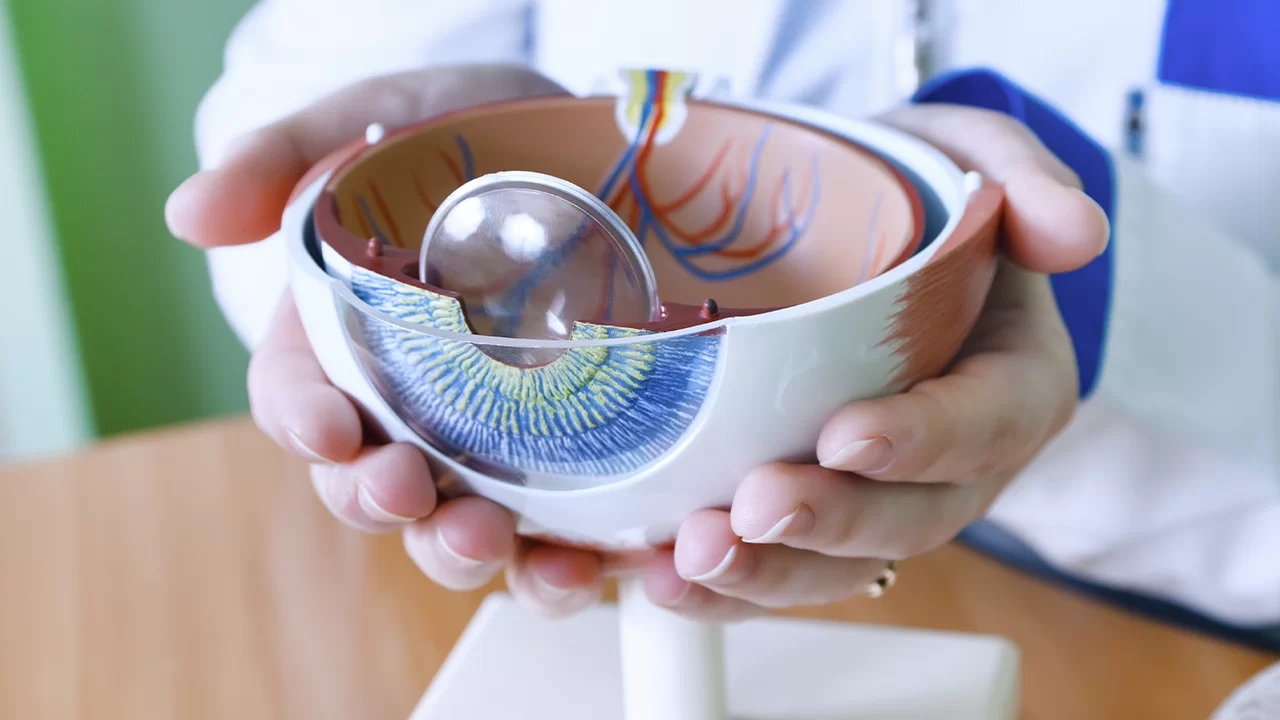
The human eye is built upon a foundation of perfect anatomical balance and engineering. Our natural intraocular lens, which enables clear vision by refracting incoming light, hangs in the center of the eye supported by invisible fibers within a thin yet durable membrane (the capsule). However, this delicate balance can be disrupted due to severe eye trauma, complications from previous surgeries, or genetic syndromes; the lens or its supporting membrane can be torn, fragmented, or displaced.
In these seemingly hopeless scenarios where the eye is left "lensless" (aphakic) and vision is significantly lost, Secondary Intraocular Lens Applications (Scleral-Sutured Lenses)—one of today’s most advanced microsurgical techniques—come into play. As Ophthalmology Specialist Ayşe Öner and her clinical team, who possess international experience in complex ocular surgeries, we reconstruct the disrupted anatomy of the eye, saving our patients from a life of thick-lensed glasses or a blurred world. By combining Turkey’s leading infrastructure in global health tourism with our VIP service approach, we offer patients from around the world zero waiting times, maximum surgical safety, and a flawless healing experience.
What is a Secondary Intraocular Lens?
In a standard cataract surgery (Primary Lens Application), the opaque natural lens is cleared using ultrasonic waves, but the outer membrane (capsule) is left in place. The artificial lens is then tucked into this natural "pocket."
However, in certain cases, this natural capsule support may be entirely absent. When there is no anatomical support left to hold a lens, the procedures used are called "Secondary Intraocular Lens Applications." In such instances, the new artificial lens must be anchored directly to the sclera (the white, sturdy outer wall of the eye) to ensure it remains centered with millimeter precision. This technical and highly sensitive procedure is known as "Scleral Fixation."
Why is Capsular Support Lost?
The need for scleral fixation typically arises in complex and challenging scenarios:
- Complicated Previous Cataract Surgeries: During a previous surgery, the natural capsule may have been torn due to a very hard cataract or inherent weakness in the eye structure, leaving the patient "aphakic" (without a lens).
- Lens Dislocation: Years after a successful surgery, the fibers holding the artificial lens can weaken (often due to Pseudoexfoliation Syndrome), causing the lens to detach and fall into the back of the eye (vitreous cavity).
- Severe Eye Trauma: Blunt force or penetrating injuries can suddenly snap the supporting fibers (zonules), leading to total lens displacement (luxation).
- Genetic and Systemic Syndromes: In conditions like Marfan Syndrome or Ehlers-Danlos Syndrome, the fibers holding the lens are congenitally weak and can fail even at a young age.
Symptoms of Lens Loss or Displacement
Living without an intraocular lens or with a displaced one results in severe symptoms that can paralyze daily life:
- Sudden, Profound Vision Loss: The world appears extremely blurred, as if looking through water.
- High Hyperopia: A lensless eye requires very thick, heavy "bottle-bottom" glasses (typically between $+10.00$ and $+14.00$ diopters) to see.
- Double Vision (Diplopia) and Glare: If the lens has shifted but not fallen completely, its edge interferes with the visual axis, causing light to refract twice.
- Iris Tremors (Iridodonesis): Because the lens support is gone, the colored part of the eye (iris) shakes like jelly whenever the eye moves.
Surgical Excellence: How is Scleral Fixation Performed?
This is a reconstructive operation that requires simultaneous intervention in both the front and back segments of the eye. It should only be performed by surgeons with high-level experience in Vitreoretinal Surgery.
- Vitrectomy: The procedure usually begins with Pars Plana Vitrectomy (PPV). Any lens fragments or the fallen lens in the back of the eye are carefully removed using microscopic tools without damaging the retina.
- Scleral Anchoring: A new, foldable artificial lens is inserted. Its "legs" (haptics) are sutured to the white of the eye using permanent, high-strength surgical threads (like Gore-Tex or Prolene). In suitable cases, Dr. Ayşe Öner also utilizes the Yamane Technique (Sutureless Scleral Tunnel), where the haptics are secured into microscopic tunnels in the sclera without the need for threads.
- Millimetric Centering: The lens is precisely centered behind the pupil, acting like a hammock that stays secure and stable for a lifetime.
The Dr. Ayşe Öner Difference in Health Tourism
Scleral fixation requires specialized equipment and long operating hours. For international patients who have been left "lensless" elsewhere or face long waiting lists, our clinic serves as an emergency exit from darkness to light.
- Zero Waiting, A Second Chance: We understand the psychological weight of previous unsuccessful surgeries. Upon arrival in Turkey, your anatomical map is created with advanced biometry, and your reconstruction is planned immediately in our JCI-accredited facilities.
- Mastery in Vitreoretinal Surgery: Dr. Ayşe Öner’s experience with thousands of cases ensures maximum protection for your retina and cornea, even in the most complex trauma or "fallen lens" scenarios.
- Full VIP Logistics: Post-operative care is paramount. We manage your VIP airport greetings, luxury hygienic accommodation near the clinic, and all transfers, so you never have to worry about logistical details.
- Native Language Communication: You will hear every detail of your treatment plan directly from Dr. Ayşe Öner, supported by medical interpreters in your own language.
- Global Remote Follow-up: The healing process requires monitoring. Through our tele-medicine network, our team follows your progress and medication use for months after you return home.
A complicated surgery or an unfortunate trauma does not have to mean the end of your vision. To reconstruct your eye anatomy with the world’s most advanced microsurgical techniques and experience Turkey’s peerless health tourism comfort, contact our international patient consultants today. Your second chance is in the most reliable hands.
Frequently asked questions
In a normal cataract surgery, the very thin capsule (membrane) of our own lens is left in place, and the artificial lens is safely seated inside this capsule. However, if you have had a previously unsuccessful cataract surgery and this membrane was torn, or if your lens has fallen into the eye due to severe trauma or genetic diseases like Marfan Syndrome, there is no "place (capsule)" left to put a new lens. In this case, the process of hanging or fixing specially designed artificial lenses to the outer white wall of the eye (the sclera) with permanent sutures is called a "Secondary Lens Application."
This operation is one of the "mastery" areas of ophthalmology requiring high-level surgical skill. These lenses, placed into the eye wall by Dr. Ayşe Öner using the most advanced techniques (sutured or sutureless scleral fixation methods), are balanced with millimetric precision. When performed successfully, the lens remains fixed in place for a lifetime, providing the patient with safe, clear focus forever.
Many clinics that avoid specialized cases (complicated surgeries) may turn patients away in this manner. However, this is exactly our clinic's area of expertise. With our VIP medical tourism service, your operation plan is made the day you arrive, skipping long waiting lists. The debris left by previous unsuccessful surgeries is professionally cleared, your new lens is suspended to the eye wall, and you return to your country with HD clarity after a safe convalescence period supported by luxury accommodation.