The eye is the most exposed organ to the outside world, managing our visual perception while remaining one of the most delicate and vulnerable parts of the human body. Sudden accidents, workplace hazards, or unfortunate injuries can disrupt the perfect anatomy of the eye in seconds. Unlike classic cataracts that develop due to old age, Traumatic Cataracts can occur at any age and appear suddenly, posing a severe threat to vision. Their treatment requires much more than a standard eye operation; it necessitates high-level "reconstructive microsurgery" expertise.
As Ophthalmology Specialist Ayşe Öner and her visionary clinical team—who successfully manage the most complex surgeries during moments of crisis—we repair traumatized eyes with advanced technologies and restore lost light. Thanks to Turkey’s unshakable infrastructure in health tourism and our clinic’s privileged VIP service model, we offer international patients a rapid, reliable, and fully equipped healing process without the bureaucratic delays found in many other countries.
What is Traumatic Cataract?
In a healthy eye, the natural intraocular lens located right behind the iris refracts light and focuses it onto the retina. This lens is protected within a transparent and highly sensitive capsule (membrane).
A traumatic cataract occurs when this natural lens loses its cellular structure and rapidly becomes opaque (white) due to a severe physical blow, a penetrating injury, chemical contact, or high-energy (electric/radiation) exposure. While age-related cataracts progress insidiously over years, traumatic cataracts can develop in seconds, hours, or a few days. The impact may tear the protective capsule, allowing eye fluid to enter the lens, causing the fibers to swell and turn white (opacification). This not only blocks vision but can also lead to sudden, painful secondary glaucoma (high eye pressure) crises.
Causes and Types of Trauma
The course of the disease and the surgical method to be applied vary greatly depending on the type of trauma:
- Blunt Trauma (Non-Penetrating): Occurs when an object strikes the eyeball without piercing the eye wall. Common causes include tennis or golf balls, boxing punches, airbag deployments in car accidents, or elastic cords. The shockwave can tear the delicate fibers (zonules) holding the lens or create a star-shaped opacity known as a Rosette Cataract.
- Penetrating and Lacerating Injuries: These involve objects like glass shards, metal burrs from industrial accidents, or thorns piercing the cornea or sclera to reach the lens. The capsule is torn, and the lens can turn completely white within minutes.
- Electric and Thermal Burns: High-voltage electric shocks or lightning strikes can literally "cook" (denature) the lens proteins.
- Chemical Burns: Splashes of bleach, drain cleaners, lime, or industrial chemicals (especially alkalis) can melt the front surface of the eye and penetrate deep enough to opacify the lens.
Symptoms of Traumatic Cataract
After a traumatic event, patients typically present to our clinic with:
- Sudden and severe vision loss or blurring.
- Intense pain, redness, and tearing.
- Double vision (diplopi) if the lens has shifted from its position (subluxation) due to torn fibers.
- A visible white or grey spot in the center of the pupil (leukocoria).
- Extreme sensitivity to light (photophobia).
The Critical Diagnostic Process
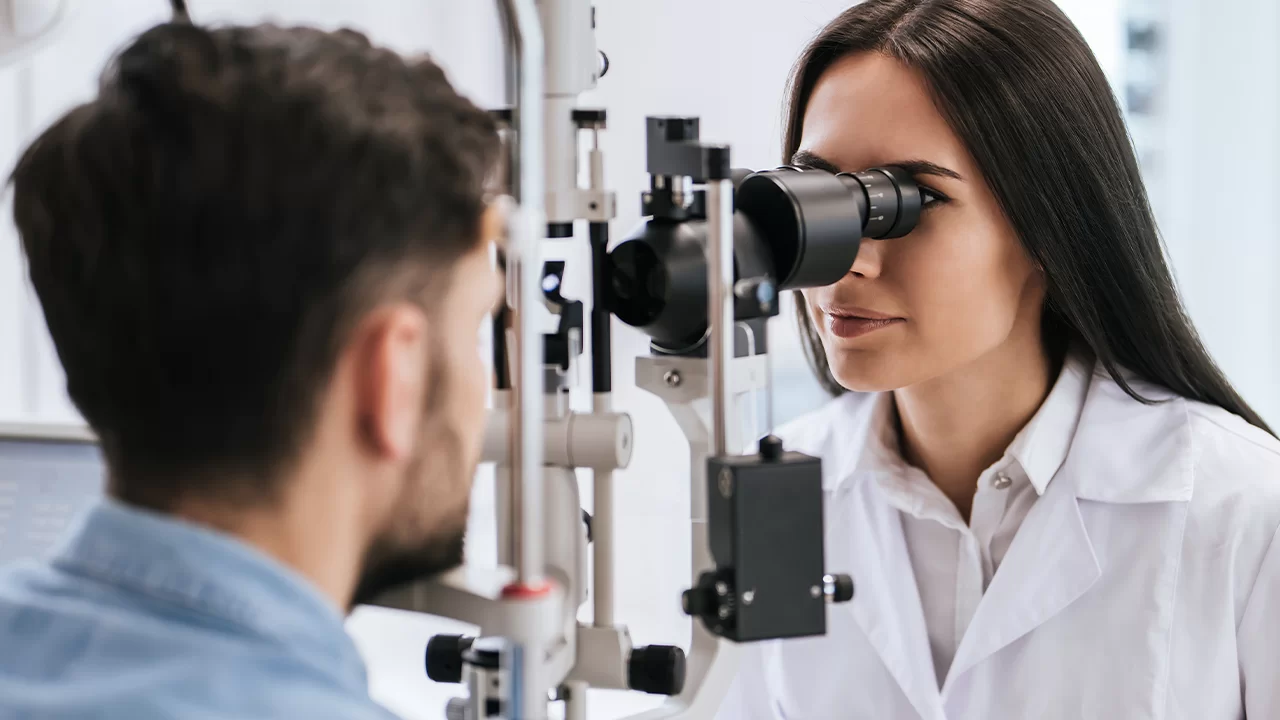
A traumatic cataract examination is a detailed "damage assessment." Dr. Ayşe Öner utilizes advanced technology to identify all damaged tissues:
- B-Scan Ocular Ultrasonography: If the cataract is too dense to see the back of the eye, ultrasound is used to check for retinal detachment, intraocular bleeding, or foreign bodies (metal/glass).
- Glaucoma Screening: Eye pressure is measured meticulously.
- Microscopic Mapping: Tears in the cornea and damage to the iris are mapped to plan the reconstruction.
Complex Surgical Treatment: Reconstructive PHACO
Traumatic cataract surgery is one of the most complex operations in ophthalmology, requiring specialized expertise. Standard rules do not apply here.
- Surgical Timing: If there is a penetrating wound, the eye wall is first sutured to ensure integrity. The cataract may be removed in the same session or after inflammation is controlled.
- Zonular Support: If the fibers holding the lens are torn, Dr. Ayşe Öner may use a Capsular Tension Ring (CTR)—a microscopic support spring—to stabilize the lens capsule.
- Iris Repair (Pupilloplasty): If the iris is torn, it is repaired with micro-sutures during the same session to prevent light sensitivity and restore aesthetic appearance.
- IOL Fixation: If the lens capsule is too damaged to hold a new artificial lens, it is secured directly to the white wall of the eye (sclera) or the iris using specialized suturing techniques.
Turkey: A Safe Haven for International Patients
Eye traumas are moments of panic. Many international patients who are told "nothing can be done" or face month-long waiting lists in their home countries find hope through Turkey’s health tourism capabilities.
- Emergency Action Plan: Upon contacting us with your medical reports, bureaucratic hurdles are cleared quickly. Surgery rooms in our JCI-accredited partner hospitals are prepared immediately upon your arrival.
- Expert Reconstructive Experience: Rebuilding the anterior segment of a damaged eye requires specific experience. With tens of thousands of cases, your eyes are in the most capable hands.
- VIP Logistics: We handle all transfers and luxury accommodations so you can focus entirely on your recovery.
- Remote Follow-up: Post-operative care is vital. Through our tele-medicine network, your healing process and medication use are monitored step-by-step even after you return home.
Do not let an unfortunate accident result in permanent darkness. To reconstruct the anatomy of your eye and regain your vision with VIP health tourism standards, contact our clinic without delay. Every second counts.
Frequently asked questions
Yes. Sometimes, after a very severe or penetrating injury (work accident, object penetration), the lens capsule can rupture and take in fluid, turning white and developing into a cataract within hours. In other cases, a cataract can develop insidiously months or years after a blunt trauma to the eye (tennis ball, punch, etc.). Therefore, urgent and long-term follow-up is mandatory in cases of ocular trauma.
It is certainly much more difficult and requires superior microsurgical experience. Due to the impact, not only may the lens have become opaque, but the ligaments holding the lens in place (Zinn fibers) may have ruptured, the pupil may be torn, or blood/lens fragments may have fallen to the back of the eye. In such complex cases, Dr. Ayşe Öner does not perform an ordinary cataract surgery, but rather a high-level reconstructive surgery that rebuilds the entire damaged anatomy of the eye.
Traumatic cataracts are our "Red Code" emergencies. Bureaucratic waiting periods are canceled for you. As soon as you are picked up from the airport, the intraocular damage (ligament ruptures, etc.) is mapped with our clinic's advanced imaging systems. If deemed necessary, Vitrectomy to save the posterior segment and Cataract surgery to save the anterior segment are combined into a single operation, saving the integrity of your eye in expert hands.